🏆 Match Analytics Report
Leyton Orient vs Reading
📊 Passing Networks
Leyton Orient Passing Network
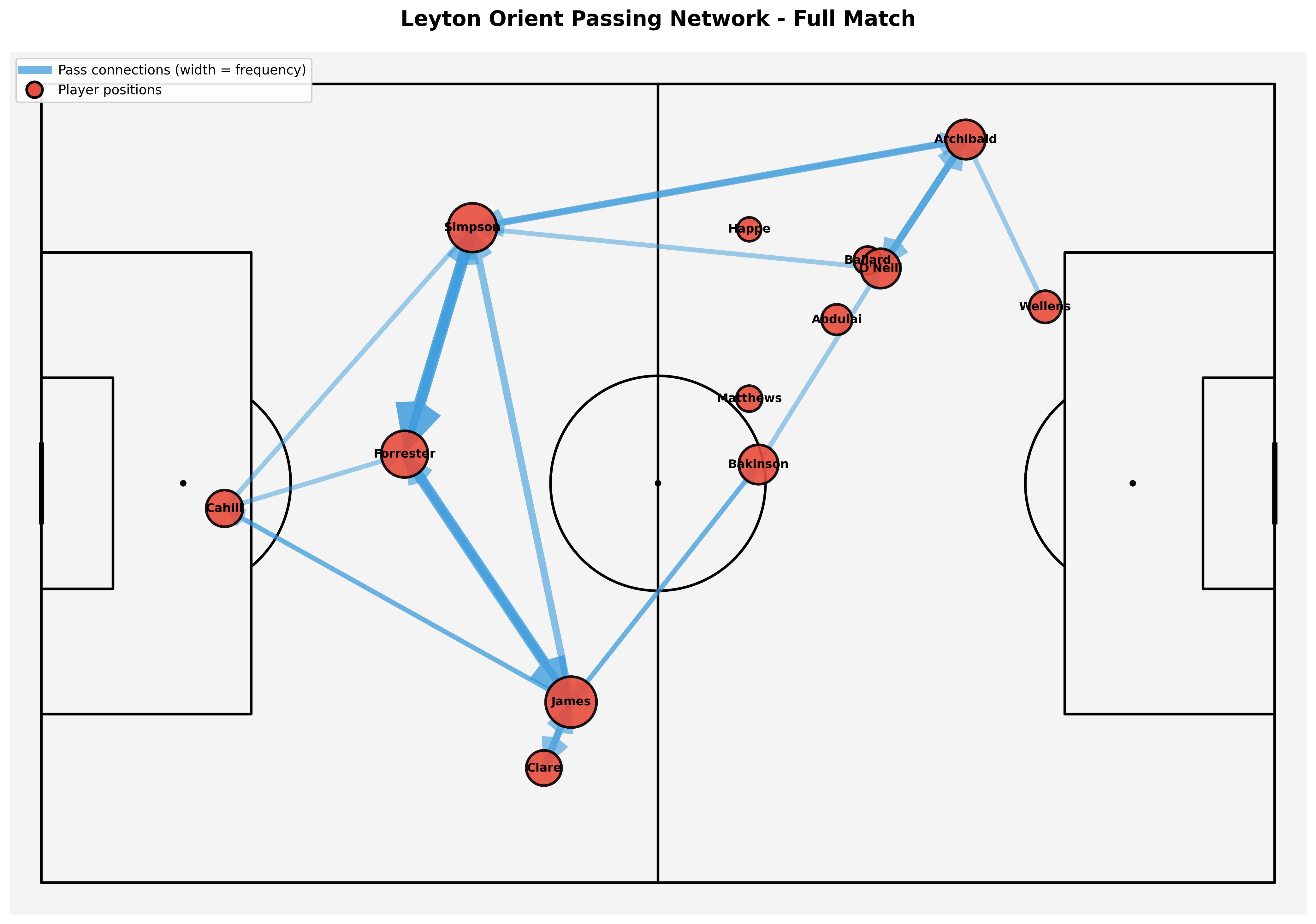
Visualizes the passing connections between Leyton Orient players. Node size represents ball touches, while edge thickness shows pass frequency between players.
Reading Passing Network
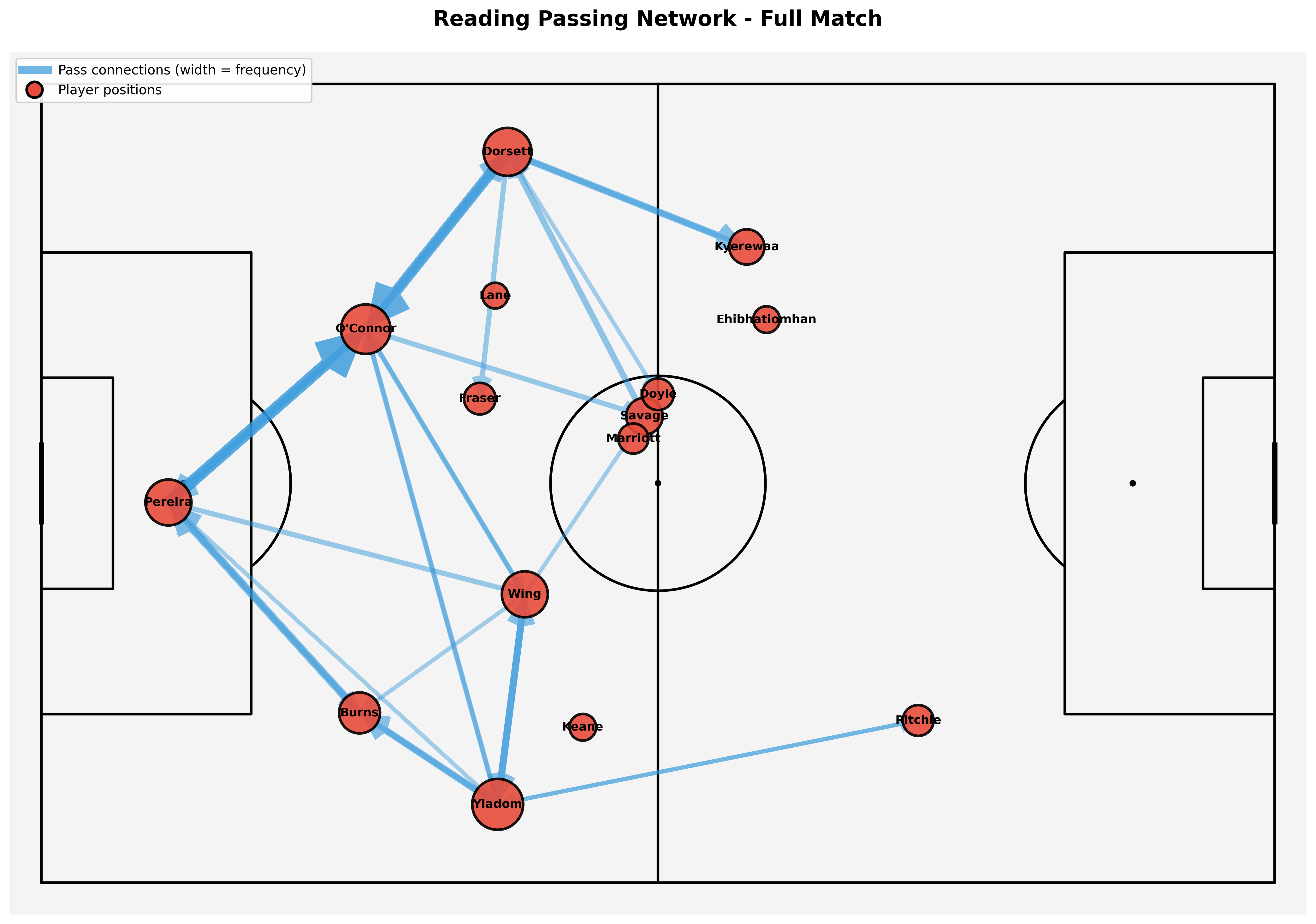
Opposition passing structure reveals their build-up patterns and key playmakers.
⚡ Progressive & Attacking Play
Progressive Passes
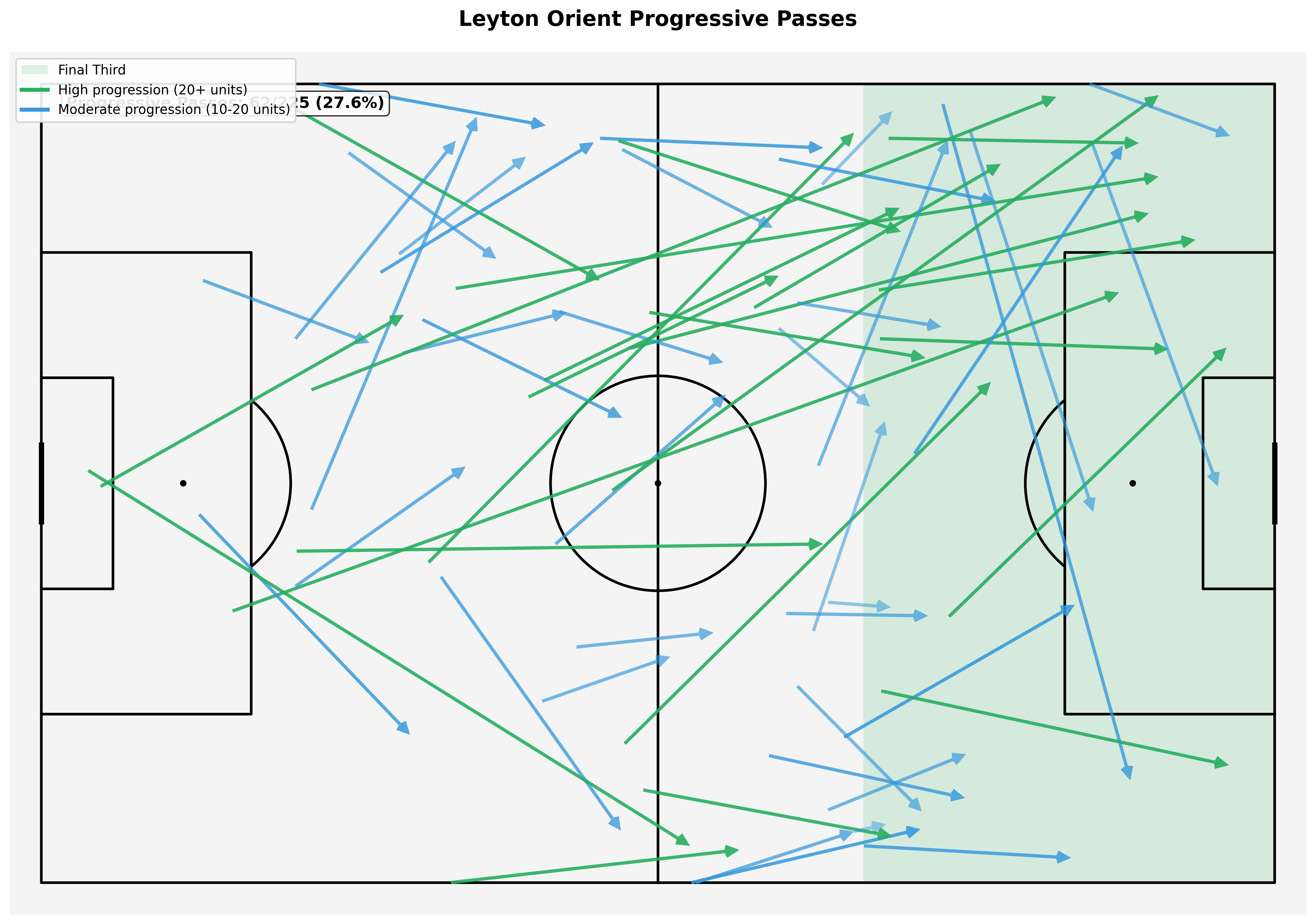
Shows passes that significantly advance the ball toward the opponent's goal. Green indicates high-progression passes (20+ units), blue shows moderate progression. The final third is highlighted to show penetrative passes.
xG Chains & Shot Creation
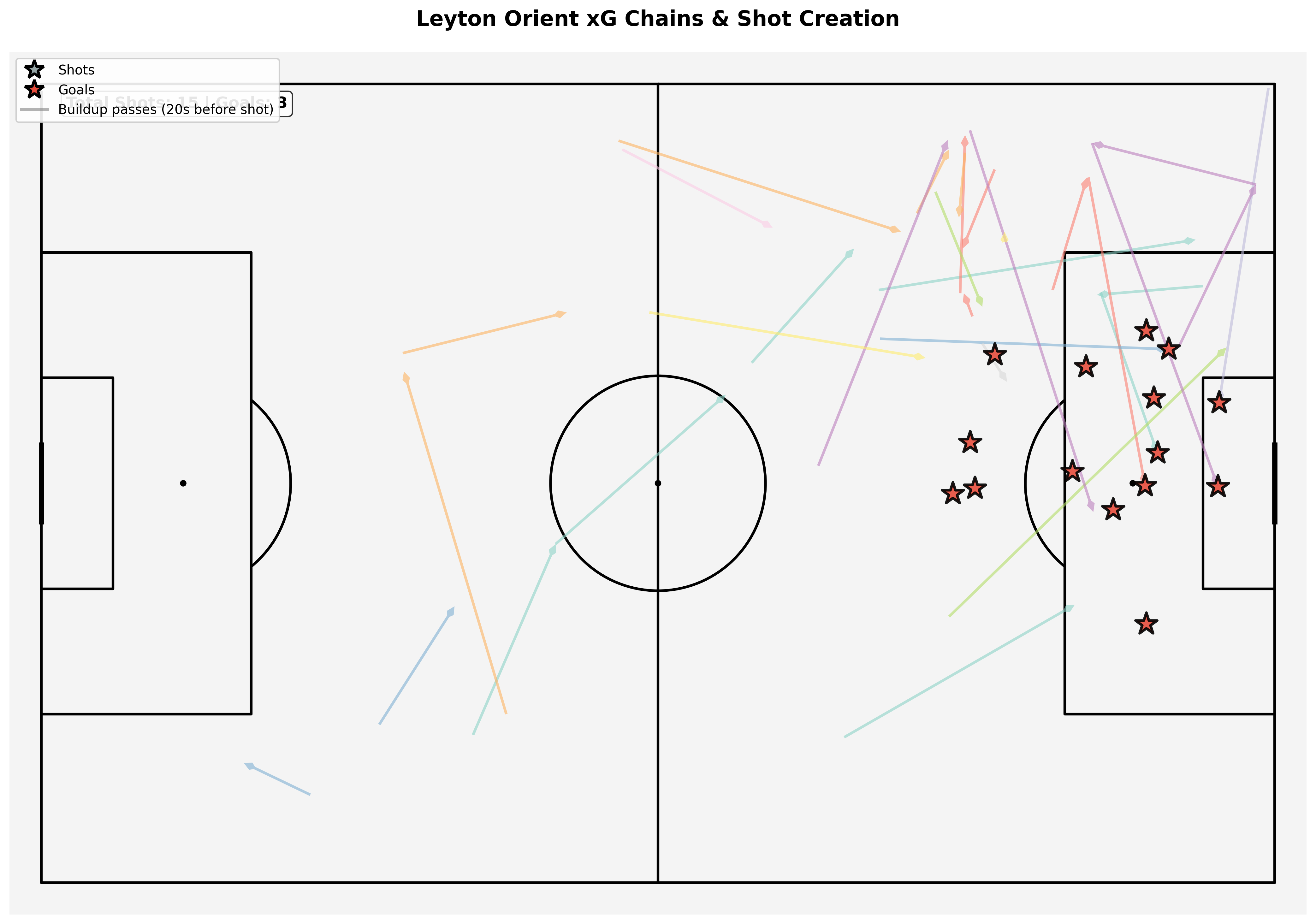
Traces the buildup play leading to shots. Each colored chain represents the sequence of passes in the 20 seconds before a shot attempt. Stars mark shot locations (red = goal, gray = saved/missed).
🛡️ Defensive Analysis
Defensive Pressure Map
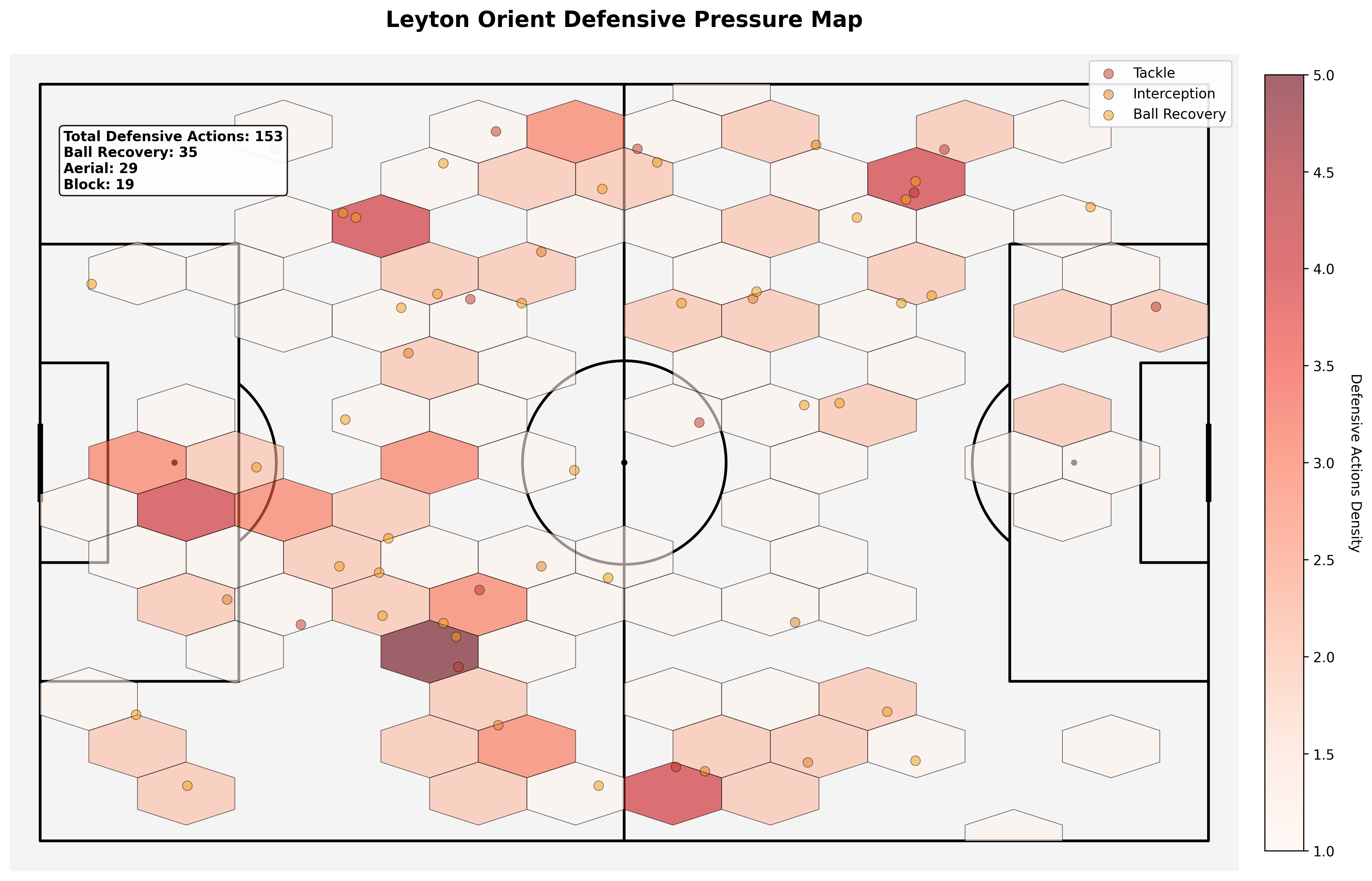
Heat map showing where Leyton Orient applies defensive pressure. Darker areas indicate higher concentration of tackles, interceptions, and ball recoveries. Reveals pressing zones and defensive organization.
Territorial Control
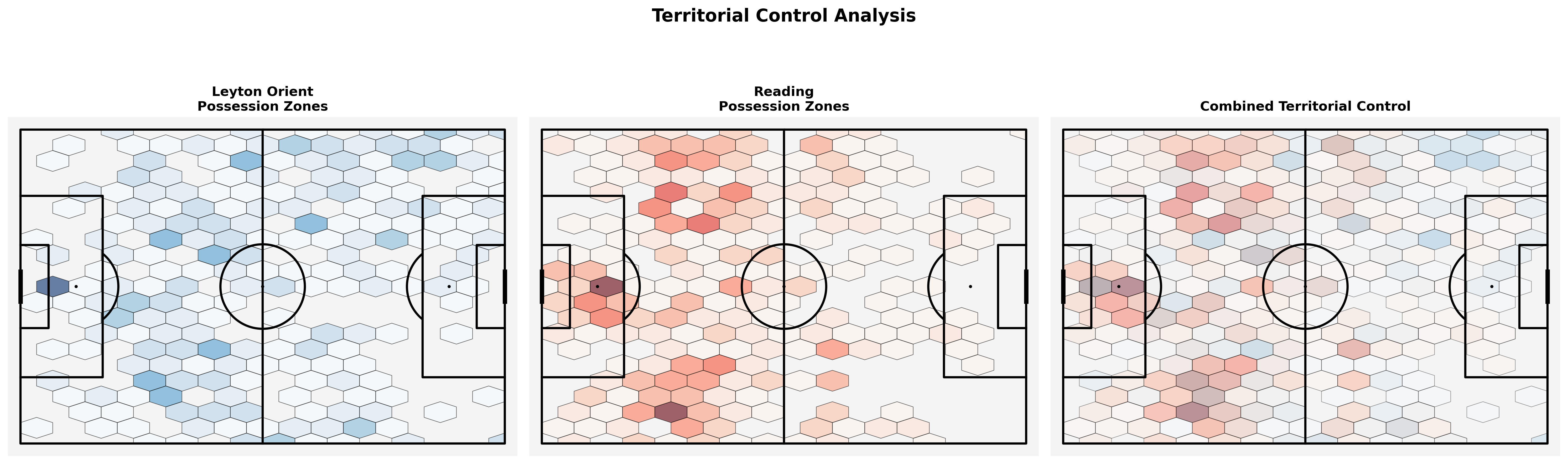
Compares territorial dominance between both teams. Blue areas show where Leyton Orient controls possession, red shows opposition control. The combined view reveals contested zones and each team's territorial strategy.
🧠 Tactical Intelligence
Deep tactical insights extracted from passing network analysis.
Leyton Orient Tactical Profile
🔴 High Priority
⚡ Consider tactical adjustment to involve these players more, or they may be marked out of the game
⚡ These players are crucial to team's passing structure. Opposition should target them for pressing. Leyton Orient must protect them or have backup distribution options.
🟡 Medium Priority
⚡ Team either struggles to build from back OR deliberately plays direct. High press may be working. Can force this by pressing defenders.
⚡ These OUTFIELD players advance the ball effectively through dribbling or passing. Give them space and options. Opposition should press them early before they can turn.
⚡ Build-up starts from these deep players (not GK). Pressing them disrupts organized attack. They need protection and options.
🟢 Observations
⚡ Direct style can be effective but risky. Ensure players can receive under pressure. Vulnerable to aggressive pressing.
⚡ Wide play can stretch defenses but may lack central penetration. Ensure central players make runs into box when wide play occurs.
Reading Tactical Profile
🔴 High Priority
⚡ Consider tactical adjustment to involve these players more, or they may be marked out of the game
⚡ These players are crucial to team's passing structure. Opposition should target them for pressing. Reading must protect them or have backup distribution options.
🟡 Medium Priority
⚡ Team either struggles to build from back OR deliberately plays direct. High press may be working. Can force this by pressing defenders.
⚡ These OUTFIELD players advance the ball effectively through dribbling or passing. Give them space and options. Opposition should press them early before they can turn.
⚡ Build-up starts from these deep players (not GK). Pressing them disrupts organized attack. They need protection and options.
🟢 Observations
⚡ Good for defensive organization but may lack depth in attack. Could struggle to stretch opposition vertically.
⚡ Wide play can stretch defenses but may lack central penetration. Ensure central players make runs into box when wide play occurs.